How losing my job helped me level up

TLDR
If you want to be a good, cutting edge developer, code has to be one of your hobbies. Somehow, some way.

In addition to your day gig, you’ll find yourself reading, experimenting, sandboxing, building a project, going to meetups, and attending conferences. If you’re on the next-level tip, you’ll be contributing to open source code, technical blogging, teaching, or giving talks at meetups and conferences. 

I’m not saying that we have to do and know everything all the time, even though some people manage to, somehow. But if we want to keep up we have to do some of it regularly.

The only way to learn code is to write code, ultimately. Like learning a spoken language, it’s not something you can get from reading or watching tutorials. The physical act of typing, problem solving, struggling, researching, and building muscle memory for those repetitive bootstrappy chunks are the processes that ingrain a new language in the skillsets section of your mind. We’ve got to build those new neuron pathways every way we can.

Sometimes you just need to know enough to understand the high-level concepts, the pros and cons, and the state of the ecosystem.

But there have been a few times where I’ve watched tutorials for hours, understood everything, and then sat down with my laptop, fired up the IDE, and couldn’t for the life of me bang out snippets and examples, e.g. “Hello, World”, without googling or reading documentation.

Acceptance

Continue reading →

RVA JS

I began writing this yesterday at RVA JS.

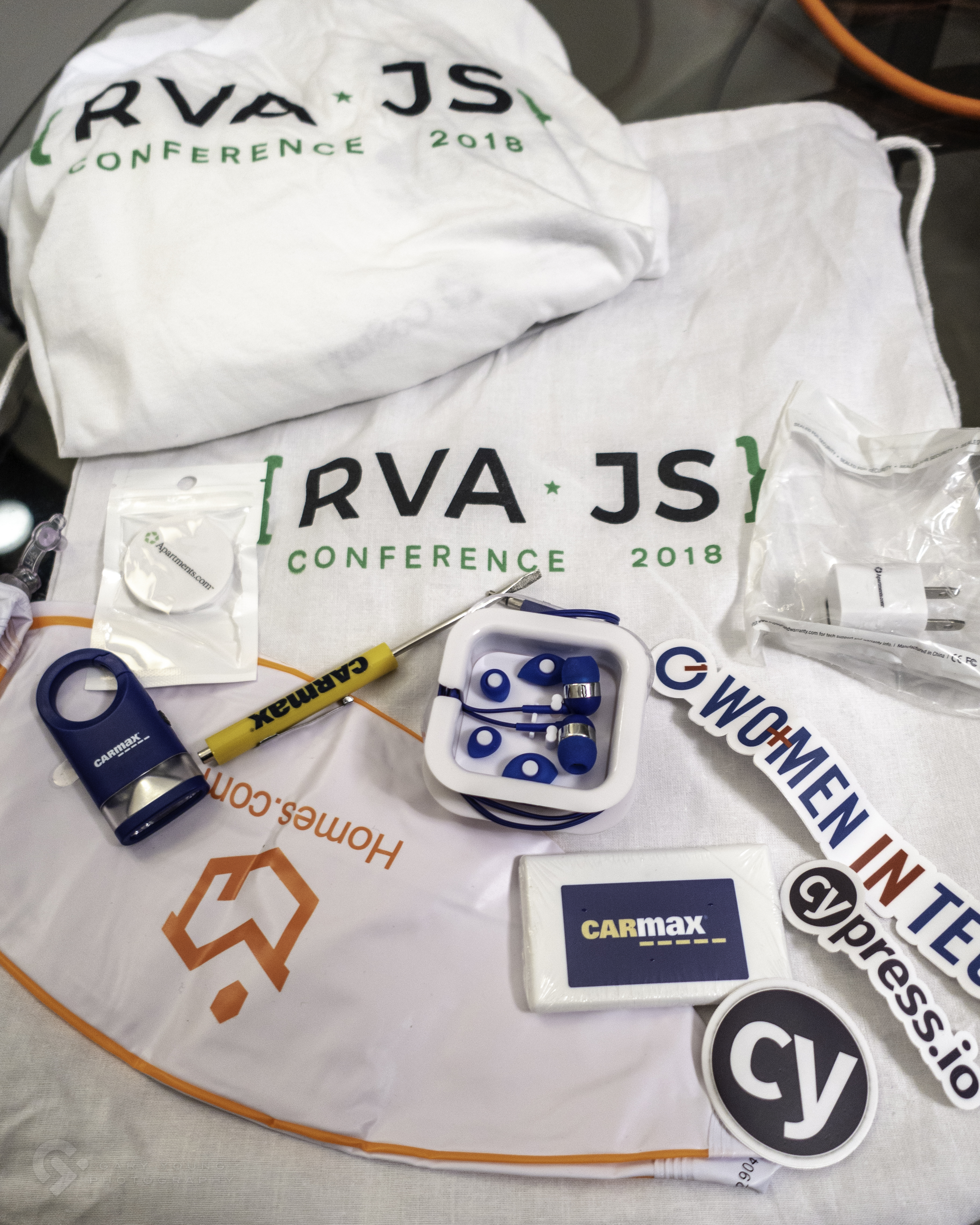
Today I’m at RVA JS 2018, Richmond’s second annual JavaScript developer’s conference.

DSC05080.JPG

I haven’t been to a conference in ages. I’ve always wanted to attend conferences for UI/UX Design and Front End Web Development, come back to the workplace with useful knowledge, and have constructive impact. Somehow, for budgetary reasons usually, I routinely missed the travel/conference/education boat.

Out of a sense of nostalgia, I googled the possibilities and was excited to see that there are options within striking distance. Since I have plenty of time on my hands these days, in theory, I figured it would be a wise investment of time and energy to check out some of the Mid-Atlantic’s tech conferences.

Since I’ve been all over YouTube and the internet reading and scouring articles, trying to nail down some sense of direction and interest in this new dev world, it’s interesting to see the difference between local, national, and international thoughts and trends. Are there a few gurus unintentionally dictating our developer lives through proclamations? Is the web dev community skeptically but too willingly influenced by the cult of personality?

Never a dull moment, but always forward.

Continue reading →

Udacity React Nanodegree: Project One

TLDR

Read the directions.

It’s been about two week’s since I started Udacity’s React Nanodegree course. A large part of it is breaking my habitual ways of thinking. Embrace the new.

Is there a good tool that builds a diagram of component-based frameworks?

WHEN IT COMES TOGETHER

I love the feeling when you’re coding and it comes together. It’s the small victories that add up to satisfaction. These modern frameworks like React are good for a little instant gratification. Declarative programming and data binding equals pieces falling into place like Tetris.

The only thing that will consume more of your time than frustrated, banging your head against the table, learning curve, I’m never going to finish this in time coding, is the smooth sailing, getting a lot of stuff done, in a groove and don’t want to stop, time disappears, making magic coding.

WHEN IT DOESN’T

Of course, there are frustrations. When learning new frameworks you end up using whatever sources of info are available: YouTube, blogs, articles, code repos, and forums.

The project seemed straightforward at first. I wanted to be done early. I got the basics working. Then I read the requirements again a few days later. Oh. Right. The things I had questions about were intentionally designed that way. Mental note: RTFD.

There are two pain points that slow me down:

  1. Not thinking in components (declarative vs. imperative)
  2. Outdated information online

A New Way of Thinking

Continue reading →